Fault Lines in American Power: From Reproductive Battles to Institutional Leverage
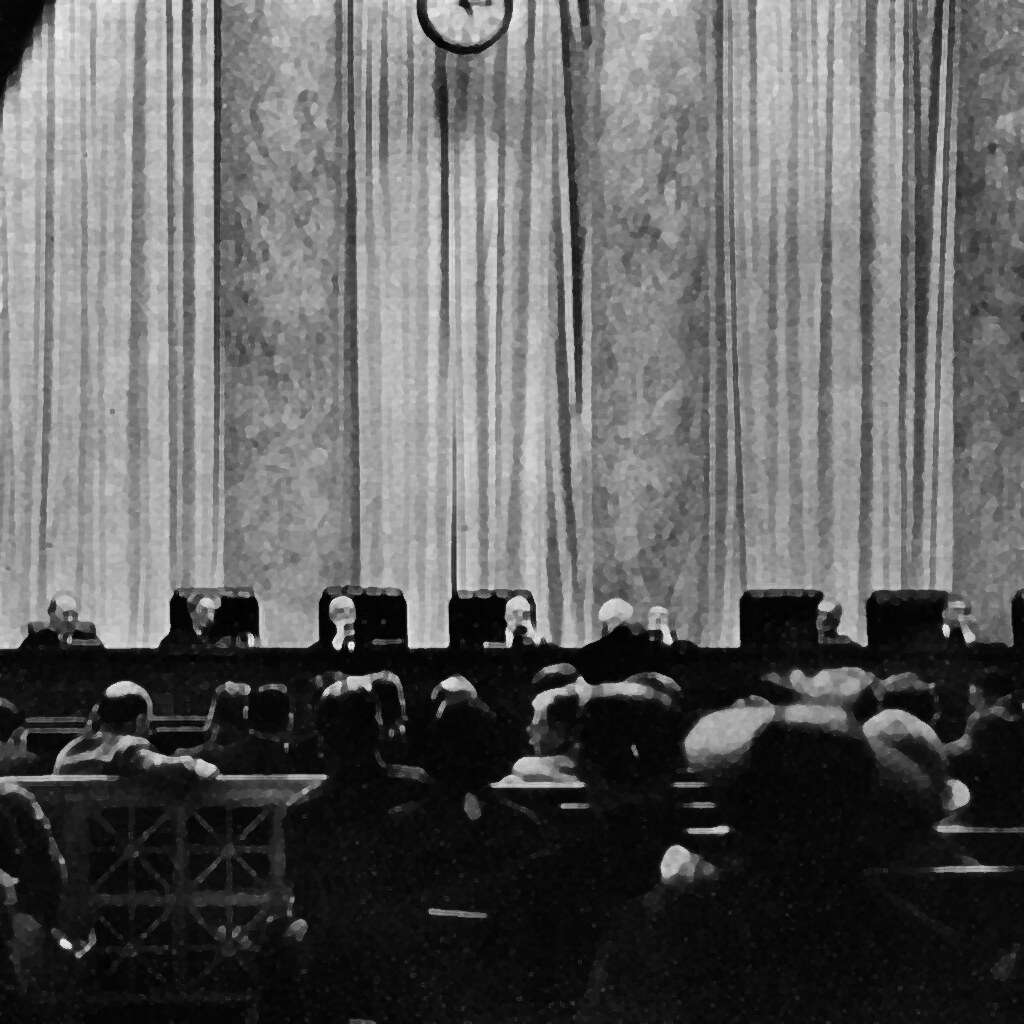
The United States is operating in an increasingly decentralized reality, where the divide between state autonomy and federal oversight keeps widening. Where federal institutions once established broad national baselines, it is now localized legislation, political violence, and executive instruments that steer the country's trajectory. Across reproductive rights, partisan violence, electoral restructuring, and federal enforcement, the same pattern repeats: power is dispersing downward and inward, becoming more local, more confrontational, and progressively harder to reverse from a single national center.
1. Reproductive Rights: A Legal Postcode Lottery
Following the Supreme Court's 2022 decision to overturn Roe v. Wade, access to reproductive healthcare in the U.S. splintered along state boundaries into something that increasingly resembles a postcode lottery.
Contraceptive Access. While contraception remains federally protected under Griswold v. Connecticut (1965), access is facing mounting friction in conservative-led states. Tactics include exclusionary state-funded healthcare policies, expanded religious exemptions for healthcare providers, and legal definitions that conflate emergency contraception (Plan B, IUDs) with abortifacients.
Personhood Doctrines. Legislative moves to define fertilized embryos as legal persons have created direct operational risk for clinics and maternity care. The Alabama Supreme Court's 2024 ruling in LePage v. Center for Reproductive Medicine, which held that frozen embryos are considered children under the state's Wrongful Death of a Minor Act, prompted several IVF clinics to halt services and remains a benchmark for how far personhood doctrine can reach.
Decision-Makers. The divide does not track strictly along gender lines: female legislators and judges feature prominently on both sides of the push to restrict or codify access.
| Policy Approach | Representative States | Legislative Focus |
|---|---|---|
| Protective (Pro-Choice) | California, New York, Illinois, Oregon, Michigan, Kansas | Shield laws for out-of-state patients, constitutional protections |
| Restrictive (Pro-Life) | Texas, Alabama, Idaho, Missouri, Arkansas, Tennessee | "Trigger laws," bans tied to gestational age, scrutiny of IVF |
2. Political Polarization and Targeted Violence
Cultural and partisan hostility increasingly manifests in physical security threats. The assassination of conservative commentator Charlie Kirk — shot on 10 September 2025 while speaking to roughly 3,000 people at Utah Valley University — is the most stark illustration of the volatile domestic climate.
The case intersects several fault lines. Tyler James Robinson, 22, had grown up in a conservative family in southern Utah (his parents are registered Republicans; he described his father as "pretty diehard MAGA"). Over roughly a year he shifted left, becoming more supportive of gay and transgender rights and more hostile to the Trump administration. At the time of the attack he lived with and was in a romantic relationship with a roommate who was transitioning from male to female. A spent casing reportedly carried an "anti-fascist" symbol alongside an "Hey fascist! Catch!" message — though authorities have never confirmed a single motive, and one reading of the arrows points to a video-game input sequence instead. What the case undeniably shows is how hyper-polarized rhetoric, personal environments, and ideological radicalization intersect in modern political violence.
3. Institutional Maneuvers and Electoral Restructuring
State legislatures increasingly use procedural rules to consolidate partisan control, with Texas as the primary battleground.
Quorum-Busting Dynamics. The Texas Constitution mandates a two-thirds supermajority for a legislative quorum. While Democratic lawmakers have historically used walkouts to stall restrictive bills, Republicans have responded with punitive measures. After Democrats fled the state in August 2025 to block the GOP-led congressional remap, Republican leaders pushed fines of $500 per day absent (plus law-enforcement costs — over $8,000 per member for some), stripped committee roles, and floated threats to seats.
Mid-Decade Redistricting (2025). Departing from the standard 10-year decennial cycle, Texas enacted House Bill 4 in August 2025. The mid-decade remap redrew congressional maps ahead of the 2026 midterms with the explicit goal of adding five Republican seats — though the party's own backers privately concede the final plan may deliver fewer, and legal challenges over racial gerrymandering have continued into 2026.
Counter-Messaging. Figures like Texas State Representative James Talarico — a 2026 U.S. Senate contender and a student at a progressive Presbyterian seminary — counter Christian nationalist movements by grounding progressive policies in explicit theological arguments. Talarico has pointed to his bipartisan work capping insulin copays in the Texas House as evidence that policies like drug-price relief flow directly from his faith.
4. Executive Tools and Federal Enforcement
At the federal level, executive power leans on specific legal instruments and administrative apparatuses.
The Presidential Autopen. The automated signing device remains a legally recognized tool. Under a 2005 Office of Legal Counsel opinion, a president need not physically affix the signature: so long as the president personally authorizes the decision, a subordinate may affix it mechanically.
Historical Fringe Theories (Executive Order 11110). JFK's 1963 order merely transferred regulatory authority over silver certificates to the Treasury Secretary as part of a planned transition to Federal Reserve Notes. Frequently cited in conspiracy narratives claiming Kennedy was targeting the Federal Reserve, it was in fact an administrative phase-out measure.
Immigration and Customs Enforcement (ICE). Established in 2003 under DHS in the wake of 9/11, ICE splits operational focus between cross-border crime (HSI) and interior deportations (ERO). Enforcement priorities have shifted sharply by administration — from Bush-era workplace raids, to Obama-era criminal priorities, to the first Trump term's "everyone present" posture, to Biden-era targeted risk assessments. The second Trump term has gone further still: a mass-deportation campaign under "border czar" Tom Homan, with ICE increasingly arresting people far from the border and holding detainees longer. The numbers are historic — roughly 50,000 arrests in July 2026 alone (the largest single month of the second term), a push toward a 2,000-per-day arrest target, and some 600,000 people passing through immigration detention since 2025. Public data releases were themselves disrupted by the late-2025 government shutdown.
The Takeaway
Across all four fault lines, the core trend is the same: American political power is increasingly localized, aggressive, and instrument-driven. Federal baselines have deteriorated, leaving state legislative maneuver and executive tools as the primary drivers of policy enforcement — with the courts, the campaign trail, and the occasional rooftop the battlefield where it all plays out.
Sources
- U.S. Supreme Court: Dobbs v. Jackson Women's Health Organization (2022)
- U.S. Supreme Court: Griswold v. Connecticut (1965)
- Wikipedia: LePage v. Center for Reproductive Medicine (Alabama, 2024)
- Wikipedia: Assassination of Charlie Kirk
- PBS NewsHour: As officials searched for Charlie Kirk's shooter, suspect confessed to his partner
- Wikipedia: 2025 Texas redistricting
- Texas Tribune: Texas Democrats hit with over $8,000 fines each for quorum break
- Texas Tribune: Texas Legislature approves stiff penalties for lawmakers who leave state
- Wikipedia: James Talarico
- Washington Post: Senate hopeful Talarico touts his faith; Texas Republicans call it blasphemy
- U.S. Department of Justice: Whether the President May Sign a Bill by Directing That His Signature Be Affixed to It (2005 OLC opinion)
- Wikipedia: Executive Order 11110
- PolitiFact: No, JFK did not plan to end the Federal Reserve
- ICE: History
- ICE: Who We Are (HSI/ERO/OPLA)
- The Guardian: ICE arrested 50,000 people in July — biggest month in Trump's second term
- The Marshall Project: 600K people put in immigration detention during Trump's second term
- Wikipedia: Deportation in the second Trump administration
- Image: Interior of the Supreme Court Building during a session, June 7, 1937.jpg — Unknown author, Wikimedia Commons (Public domain), painterly
