Climate.us: Rebuilding Climate.gov Outside the Government
For about fifteen years, Climate.gov was the place Americans landed when they wanted a straight answer about the climate. It was run by NOAA, the National Oceanic and Atmospheric Administration, and at the start of 2025 it was the top organic result if you typed "climate" into Google in the United States. Then, over the course of a year, it stopped being updated, lost its staff and went dark.
The site that grew back in its place is called Climate.us. It is run by members of the same team, it is not part of the government, and it exists because a few people refused to let fifteen years of work disappear.
A site Americans actually used
The numbers explain why the loss mattered. Climate.gov reached more than 15 million visits a year and counted over half a million followers on social media. NPR put its traffic at nearly a million visitors a month. The site was the federal government's most accessible explanation of climate science: plain-language explainers, blogs written by working scientists, a dashboard tracking indicators such as sea level and El Niño, classroom material reviewed by educators, and grants of data for anyone who wanted to look things up themselves.
It was also, in the words of the team that built it, a two-way street. The questions readers sent in told government researchers what ordinary Americans were actually confused about, which shaped what the site explained next.
When the updates stopped
In early 2025 the Trump administration began dismantling the site. Updates stopped. Staff were laid off; Rebecca Lindsey, the long-time lead writer and editor of Climate.gov and more recently its program manager, was among those who lost their jobs in February. By the summer the rest of the team supporting the site was gone and Climate.gov had gone dark. As Grist reported, the shutdown was presented as part of complying with an executive order calling for "restoring gold standard science."
The consequences went beyond one website. The congressionally mandated National Climate Assessments disappeared from federal sites. In December, according to Grist, the Environmental Protection Agency removed at least 80 webpages covering the causes, indicators and effects of climate change, and its own explainer on the causes of climate change stopped listing human activity as a direct driver of warming. Researchers and monitoring groups — among them the Environmental Data and Governance Initiative — began tracking what was being taken down and preserving copies.
Four people and a plan
The former Climate.gov team did not go quietly. They met periodically over the summer of 2025 to talk about what could be salvaged, and by the end of that summer they had decided to build an independent version of the site.
When NPR spoke to Lindsey on 4 September 2025, the project was four unpaid people and a lot of uncertainty. "We want to essentially create a nonprofit successor to climate.gov in a place outside the federal domain where people can trust that the information is not going to be politicized or tampered with," she said. She was explicit that they were running on goodwill, and that they were looking for nonprofit and foundation funding to move the operation out of the federal domain for good.
Rescue first, rebuild second
The first job was recovery. Key resources that had been deleted or had become hard to reach were rescued and republished, including the Fifth National Climate Assessment — a report that had been taken down from federal sites even though Congress had mandated it.
The second job was harder: not just keeping the old material alive, but continuing it. That meant new explainers, new visuals, new Q&As, each one reviewed by scientists, with the same editorial approach as before. "We just try to constantly take the pulse of what scientists say is valuable and important and needs to be talked about and explained," Lindsey told Grist.
The launch
The full site launched on 23 June 2026. What is on it now is recognisably the successor: Climate.gov's fifteen-year archive of news and features, the expert blogs, the climate dashboard, maps and data pathways, climate literacy material, the CLEAN collection of classroom resources, and restored access to the Fifth National Climate Assessment.
Two things about how it is paid for stand out. About a third of the launch funding — roughly $250,000 — came from more than 2,500 individual donations, mostly small ones. And more than 80 scientists volunteered to serve as subject matter reviewers, which is the part that keeps the content science-checked rather than merely well written.
Climate.us is careful about what it claims to be. It states plainly that it is not an official U.S. government website, but an independent nonprofit project built to protect public access to climate knowledge.
What comes next
The early traffic suggests there was demand. Two weeks after launch, the site had recorded around 800,000 page views, according to Grist — a striking figure next to the roughly one million a month the old government site used to attract, and one that came mostly from word of mouth.
The open question is durability. Small donations covered a third of the launch costs, which means the rest came from foundations and larger supporters, and a nonprofit newsroom of this kind lives or dies by whether that funding keeps coming. The team has framed the shift in its own words as a move "from rescue work to long-term public service," and that is exactly the part that is not yet proven.
What is already settled is the smaller, more human part of the story: a website that a government switched off is running again, under its own name, paid for in part by the people who used it.
Sources
- Climate.us: launches independent website for trusted climate information
- Climate.us: About
- NPR: Former staffers of Climate.gov are attempting to launch a new site: Climate.us
- Grist: The plan to make climate science harder to erase
- The New York Times: Former NOAA Employees Revive Climate.gov Web Site
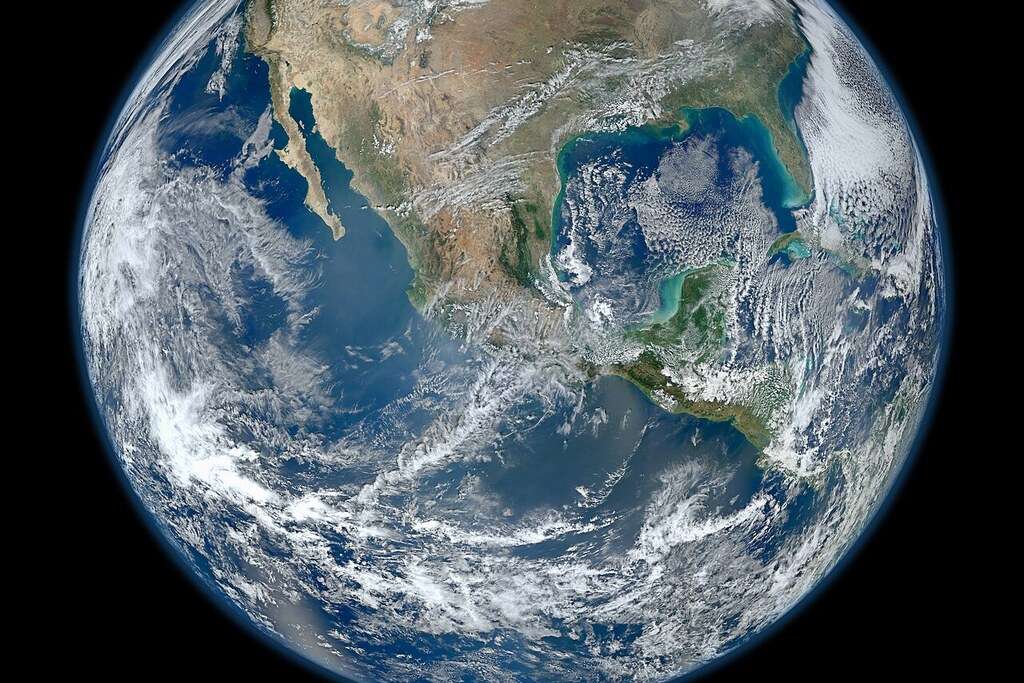
- Header image: North America from low orbiting satellite Suomi NPP — NASA/NOAA, public domain
