Nitrogen in the Netherlands: what nature measures, what the models calculate, and who pays
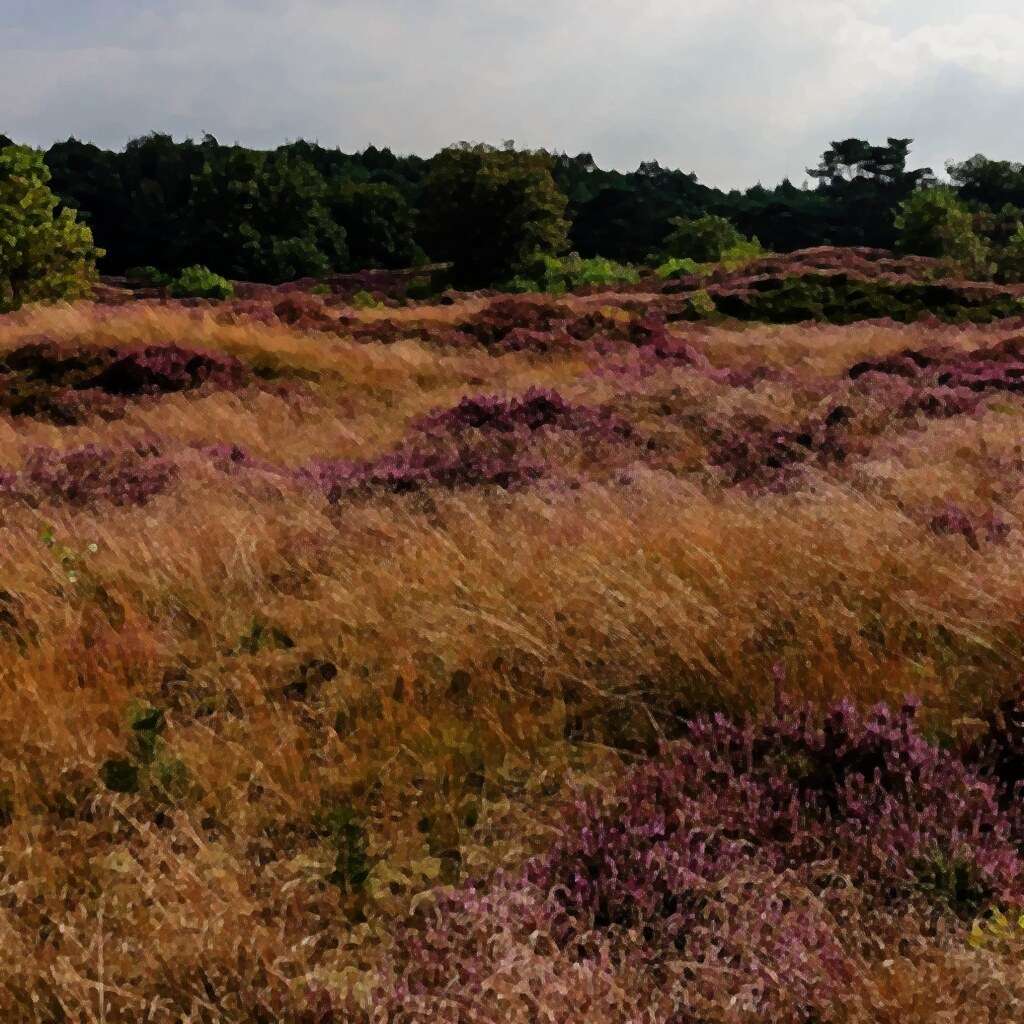 The Dutch nitrogen dossier is discussed in three separate languages at once: that of monitoring (what is measured in nature), that of calculation (what the models predict at a given location), and that of permits (who may build, expand or farm). The three agree on the direction and differ on the size and the location. This post sets them side by side: the measured trend, the uncertainties the model keepers themselves publish, and what the dossier costs farmers, builders and households.
The legal frame: one ruling, and everything after it
On 29 May 2019 the Council of State (Raad van State) ruled that the Programme Approach to Nitrogen (PAS) could no longer serve as a basis for consent, because it anticipated positive effects of future measures — contrary to the EU Habitats Directive. There is no appeal against that ruling, and NOS reported the same day that about 180 already granted permits were in doubt. Everything since is an attempt to work within that constraint.
The Wet stikstofreductie en natuurverbetering (2021) set statutory environmental values for nitrogen: by 2025 at least 40 percent of the nitrogen-sensitive Natura 2000 area should have a deposition below the critical deposition value (KDW), 50 percent by 2030 and 74 percent by 2035. Parliament wrote those in as result obligations (Staatsblad 2021, 140). The Netherlands has 162 Natura 2000 areas; each habitat type has its own KDW.
Case law keeps moving:
- 18 December 2024 — the Council of State changed its line on internal offsetting (intern salderen): it no longer plays a role in deciding whether a nature permit is needed, but it still counts when granting one. A ruling of 28 May 2025 extended that to offsetting against general fertilising rules.
- 22 January 2025 — the District Court of The Hague ruled in the Greenpeace case that the State acts unlawfully by not halting the deterioration of nitrogen-sensitive nature in time, and ordered it to meet the 2030 target, with a penalty of 10 million euros if it fails. The government filed an appeal on 11 April 2025. In that appeal Greenpeace is asking for 74 percent below the KDW by 2030 (June 2026).
- 4 June 2025 — the court annulled Schiphol's nature permit; the airport currently has none.
- 11 March 2026 — the Council of State annulled the A27/A12 motorway decision at Amelisweerd because the substantiation of external offsetting was insufficient.
- 24 June 2026 — leasing nitrogen space is possible, the Council of State ruled, but because it is a form of external offsetting it must meet the conditions for it.
- 27 October 2026 — a hearing on preliminary questions to the EU Court about Article 6(3) of the Habitats Directive (what counts as "the same project", and the additionality requirement).
The coalition agreement of 30 January 2026 chooses a different instrument: sector targets for 2035 written into law, with an interim step for 2030. For agriculture 42 to 46 percent less ammonia relative to 2019, for industry 50 percent, for mobility 50 percent of NOx. The cabinet says it wants to replace the critical deposition value with "a legally tenable alternative" and to introduce a calculation floor once a guaranteed reduction package exists. In the meantime the Dutch derogation for spreading more animal manure ends in 2026.
What the measurements show
The long trend is downwards. The national average deposition was over 2,700 mol of nitrogen per hectare per year in 1990 and about 1,315 in 2023 — a reduction of roughly 51 percent. Ammonia emissions from Dutch agriculture fell 66 percent in that period and nitrogen oxide emissions 76 percent, most of it before 2010 (CLO, the joint CBS/PBL/RIVM/WUR indicator set). Because of weather, year-to-year variation in deposition is around 10 percent, which is why single-year figures need care.
On the protected areas the RIVM reported in October 2026 that deposition fell by about 29 percent between 2005 and 2024, and that the amount above the critical deposition value fell by 53 percent. In 2024, 31 percent of the nitrogen-sensitive area sat below that value; the statutory target for 2025 was 40 percent. In 2023, by the same indicator, about 70 percent of the sensitive area was still above the critical value, with an average exceedance of roughly 405 mol per hectare per year — down from 920 mol in 2005 (CLO).
Where that deposition comes from is measured and modelled per sector. On Natura 2000 areas, 64 percent comes from Dutch sources and 36 percent from abroad; within the Dutch share agriculture accounts for 47 percent, mobility 12 percent and industry 2 percent. Averaged over the whole country the Dutch agricultural share is about 51 percent (CLO, 2023 data). Agriculture is responsible for 90 percent of Dutch ammonia emissions (2024, same source).
The RIVM measures ammonia in the field rather than only calculating it: the Meetnet Ammoniak in Natuurgebieden has been running since 2005 and in 2026 covers 96 nature areas at 357 locations with passive samplers, alongside hourly measurements at eight air-quality stations used for calibration. The measured national average concentration was 5.4 µg/m³ in 2024; the yearly average has been fairly stable between 2005 and 2024.
The outlook is the part that keeps the dossier alive. In March 2026 the PBL concluded that with the measures currently included, about 33 percent of the sensitive area would be below the critical value in 2030, against a target of 50 percent, and that the nitrogen measures together contribute only 10 to 15 percent of the reduction needed to reach that target. The RIVM's 2025 monitor states that the targets have come closer but that meeting them with current policy is "very unlikely". Natuurmonumenten's position is that emissions from agriculture, traffic and industry must come down quickly and that all sectors must contribute.
What the models calculate — and what they cannot
Permits are not based on measurements at the site. They are based on AERIUS, the instrument with which deposition on Natura 2000 areas is calculated, monitored and registered. It has three parts: Calculator (the calculation used in permit applications), Register (where authorities reserve and allocate nitrogen space via nitrogen banks) and Monitor (current and expected deposition). AERIUS has been in use since 2015 under the Environmental Act, is administered by the RIVM on behalf of the ministry, and is updated every October because permit decisions must rest on current scientific insight. Underneath it sit two models: SRM-2 for road traffic within five kilometres of the border and the OPS model for all other sources, which simulates emission, dispersion, transport, chemical conversion and deposition, calibrated against the ammonia measurements.
Two properties of that instrument shape the public debate.
The uncertainty margins are published, and they are large at small scale. The RIVM's status report (2023) states that nationally there is a high probability (95 percent confidence interval) that the calculated value deviates by less than 30 percent from the true value, and at a single location — a hectare or a square kilometre — by less than 70 percent. An older RIVM estimate put the total uncertainty for a specific ecosystem at 50 to 100 percent. In a 2025 knowledge note the RIVM adds that for the contribution of an individual source locally the uncertainty is greater still, that OPS is validated up to 20 kilometres, and that "AERIUS is not a decision instrument; the calculated outcomes provide input for an assessment in which uncertainties can be taken into account". Crucially, those margins concern the total deposition from all sources, not the contribution of one project — a distinction that is easy to lose in a permit dispute.
The calculation floor is very low. AERIUS shows contributions from 0.005 mol per hectare per year. In June 2020 the Advisory Committee on Measuring and Calculating Nitrogen (the Hordijk committee) concluded that AERIUS in its existing form was not suitable for permit decisions, and in June 2026 the Landsadvocaat's advice to the Senate repeated the criticism that such a threshold amounts to false certainty — Germany, it notes, works with a floor of 21 mol. The cabinet wants to raise the Dutch floor; whether that happened in the 2026 version is not stated in the RIVM's own summary of it.
Where the space for new projects comes from is a market of its own. External offsetting allows a project to take over at most 70 percent of the nitrogen balance of a farm that stops; the remaining 30 percent is withdrawn and goes to nature (BIJ12). Nitrogen space is bought and sold commercially, and the Council of State's June 2026 ruling on leasing confirmed that temporary use is possible under the same conditions.
The bill: farmers, builders and the permits in between
Farmers. The Netherlands had 49,077 agricultural holdings in 2025, of which 23,462 grazing-livestock farms (12,386 of them dairy) and 3,212 pig and poultry farms — down from 97,390 in 2000 and 72,320 in 2010 (CBS). Sector income fell in 2025 to 11.1 billion euros, 0.5 percent less than a year earlier and the first decline since 2021 (CBS), while the average income per unpaid labour unit was estimated at 129,000 euros with a wide spread: 20 percent of farms below 3,000 euros, 20 percent above 177,000 (WUR). Rabobank's loan book to Dutch farmers grew from 46.1 to 47.5 billion euros; of the 3 billion euro sustainability fund it opened, about a third had been drawn by November 2025, 80 percent of it for land purchases, and its chief executive said that roughly half of the livestock farmers who bank with it need a new nature permit.
Buyouts. By 10 September 2026, 1,576 livestock farmers had applied under the two national termination schemes. For the peak-load scheme (Lbv-plus) 851 applications were granted, 59 rejected and 336 withdrawn; for the Lbv 587 granted, 79 rejected and 186 withdrawn (RVO). The budgets were raised to 1.102 billion euros (Lbv) and 1.820 billion (Lbv-plus) after the schemes were oversubscribed. The peak-load approach targets about 3,000 businesses whose deposition on an overloaded Natura 2000 area within 25 kilometres exceeds 2,500 mol: a positive decision is not the same as a farm that has actually stopped.
PAS-melders. These are the businesses that notified under the old PAS and never needed a permit. Of the original 3,637, there are 2,478 unique legalisation requests; as of July 2026, 19 of them hold an irrevocable permit. The legalisation programme runs to a deadline of 1 March 2028, with an extra 350 million euros made available for tailored solutions; the court in Zwolle ruled on 30 June 2026 that the province of Overijssel must treat such requests as applications for a nature permit. For this group the dossier has been unresolved for seven years.
Building. Here the sources diverge by a factor of six, and the difference is method rather than arithmetic. Bouwend Nederland, the construction trade association, counted in March 2025 that 244,000 homes could not get a permit before 2030, with 93.5 billion euros in lost investment (revised down from an initial 138 billion). The Economic Institute for Construction (EIB), working project by project, estimated that about 40,000 homes — 9 percent of the roughly half a million planned up to 2030 — cannot be built, with six to twelve months of delay and about 600 million euros in extra costs; the EIB called the higher figure about a sixth too high. The same study calculated that a calculation floor of 1 mol per hectare per year would allow 96 percent of housing construction to proceed, reducing the loss to 17,000 homes and the extra costs to under 200 million euros. The provinces, in their 2025 housing report, note that more than half of the housing programme lies within five kilometres of nitrogen-sensitive Natura 2000.
Citizens. Housing supply is where the dossier reaches people directly, through permits rather than prices. Two other effects that are often attributed to nitrogen — food prices and health — could not be quantified in the sources reviewed here: the price pressure on food is documented, but not causally linked to this dossier, and no source was found that isolates a health effect of Dutch nitrogen policy.
What is not settled
- Whether the 2030 target is achievable or has to be adapted. The State argues it is very unlikely with current policy — the RIVM and PBL figures support that — and is appealing the Greenpeace ruling, while Greenpeace is asking the appeal court for the stricter 74 percent. Until the appeal is decided, the district court's order stands.
- Whether the critical deposition value can be replaced by the "legally tenable alternative" the coalition wants, without losing the legal basis for permits. The Landsadvocaat's advice and the PBL's first reflection on the 2026 package (4 September 2026) are part of that discussion; the PBL had not yet fully assessed the package at the time of writing.
- Whether a higher calculation floor unlocks construction or only moves the uncertainty. The EIB estimate assumes projects then proceed; the Hordijk committee's objection was that a very low threshold suggests a precision the model does not have.
- What the local truth is. With national uncertainty under 30 percent but up to 70 percent at a single hectare, neither the claim that the model systematically overshoots nor the claim that it undershoots can be settled with national figures. That is why both sides argue with local measurements — and why the measurement networks are being expanded under the national nitrogen knowledge programme.
- What the end of the manure derogation in 2026 does to emissions and to farm economics, and how the EU Court answers the pending questions about Article 6(3). Both are scheduled to become clearer than they are today.
Sources
- Compendium voor de Leefomgeving: Nitrogen deposition 1990-2024
- CLO: Exceedance of the critical deposition value in Natura 2000 areas 2005-2024
- CLO: Emissions to air from agriculture and horticulture 1990-2024
- CLO: Origin of nitrogen deposition 2023
- CLO: Ammonia in air 2005-2024
- RIVM: Declining trend in nitrogen deposition on Natura 2000 areas (2 October 2026)
- RIVM: Meetnet Ammoniak in Natuurgebieden
- RIVM: Monitor stikstofdepositie in Natura 2000-gebieden 2025
- PBL: Monitoring and evaluation of the nitrogen reduction and nature improvement programme (March 2026)
- RIVM: Uncertainty in determined nitrogen deposition in the Netherlands — status report 2023
- RIVM knowledge note KN-2025-0098 on uncertainties in OPS calculations
- RIVM: Actualisatie AERIUS Calculator 2025
- BIJ12: AERIUS (Calculator, Register, Monitor)
- Algoritmeregister: AERIUS Calculator (RIVM)
- BIJ12: External offsetting (70 percent rule)
- Staatsblad 2021, 140: Wet stikstofreductie en natuurverbetering
- Rechtbank Den Haag: the court orders the Dutch State to meet the statutory 2030 nitrogen target (22 January 2025)
- Rijksoverheid: letter to parliament on the decision to appeal the Greenpeace ruling (11 April 2025)
- Greenpeace Netherlands: more nitrogen reduction demanded in the appeal (1 June 2026)
- Rechtbank Den Haag: nature permit for Schiphol annulled (4 June 2025)
- Council of State: overview of nitrogen rulings, including 18 December 2024, 11 March 2026 and 24 June 2026
- Council of State: ruling of 24 June 2026 on leasing nitrogen space (ECLI:NL:RVS:2026:3685)
- Coalition agreement 2026-2030: agriculture, nature and nitrogen
- Rijksoverheid: cabinet plans for less nitrogen
- Eerste Kamer: advice of the Landsadvocaat on the calculation floor (16 June 2026)
- CBS: Agricultural census — number of farms
- CBS: Income of the agricultural sector falls in 2025
- WUR: Income estimate for farmers and growers 2025
- RVO: current status of the Lbv and Lbv-plus (10 September 2026)
- RVO: Lbv-plus scheme (target group and threshold)
- Rijksoverheid: more budget and a longer window for voluntary termination schemes (8 April 2024)
- Nieuwe Oogst: nineteen PAS-melders have a permit, more than two thousand to go (2 July 2026)
- LTO: key dates for tailored solutions for PAS-melders
- Reformatorisch Dagblad: court opens a crack towards legalisation for PAS-melders
- Nieuwe Oogst: Rabobank has lent a third of its 3 billion euro sustainability fund (5 November 2025)
- Trouw: Rabobank chief executive on farmers not investing because of nitrogen policy
- Bouwend Nederland: nitrogen blocks 244,000 homes (March 2025)
- EIB: the new nitrogen rule and its consequences for housing construction (March 2025, PDF)
- Natuurmonumenten: position on nitrogen
- Image: Verruigde heide, Schaopedobbe — Dominicus Johannes Bergsma, Wikimedia Commons (CC BY-SA 4.0), painterly
